Cat Winter Allergies: Indoor Triggers & Solutions Guide
30-80% of allergic cats test positive for dust mite sensitivity, and symptoms spike in winter. Learn the hidden indoor triggers and how to manage them.
By Gary — 7+ years managing my Cockapoo's food allergies. Sources cited below.
9 min read
Disclosure: certain product links pay a small commission if you buy. The price you pay doesn't change, and it keeps the scanner free.
By Gary, founder of Pet Allergy Scanner. Researching pet food allergies and sensitivities across dogs and cats.
Quick Summary
- 30-80% of allergic cats test positive for dust mite sensitivity, and winter forces cats into prolonged indoor allergen exposure
- 40-50% of cats with environmental allergies also have food allergies — if your cat's symptoms persist year-round, dietary triggers may be involved
- Key symptoms to watch: overgrooming with bald patches, miliary dermatitis, head/neck scratching, wheezing, and chronic sneezing
- Free tool: use the Pet Allergy Scanner to check any cat food for hidden allergens that may be compounding winter symptoms
Cats are masters at hiding discomfort, and winter allergy symptoms often go unnoticed because they present differently than in dogs. While dog owners notice obvious scratching and ear infections, cat owners may dismiss chronic overgrooming, subtle sneezing, or bald patches as "just how the cat is." When winter forces your cat into prolonged indoor exposure to dust mites, mold, and chemical irritants, those hidden allergies can escalate.
Quick Answer: Cat winter allergies are triggered by indoor allergens — dust mites (30-80% of allergic cats are sensitive), mold, litter dust, and chemical irritants from candles, air fresheners, and cleaning products. Symptoms include overgrooming with hair loss, miliary dermatitis, head and neck scratching, wheezing, and chronic sneezing. Treatment combines environmental control, medication, and dietary management if food allergies coexist. See the cat food allergies guide for the food allergy connection.
Table of Contents
- Why Do Cats Experience Winter Allergies Differently?
- What Indoor Allergens Affect Cats in Winter?
- How Do You Recognize Winter Allergy Symptoms?
- Breed Predispositions
- The Food Allergy Connection
- Treatment and Home Care
- Honest Take
- Sources & Further Reading
- Related Articles
- Frequently Asked Questions
Why Do Cats Experience Winter Allergies Differently?
The Indoor Cat Reality
Unlike dogs who go outside multiple times daily, many cats are strictly indoor. This means year-round allergen exposure with no seasonal relief, concentrated exposure from living 24/7 in an allergen-rich environment, and constant ingestion of allergens through grooming — cats lick allergens directly off their fur.
Feline Immune System Differences
Cats' allergic responses differ from dogs in important ways. Respiratory symptoms are more common — feline asthma affects 1-5% of cats with allergies as a primary trigger. Skin manifestations are more subtle and often confined to head and neck. Cats develop unique syndromes like eosinophilic granuloma complex. Overgrooming is a primary symptom frequently mistaken for behaviour problems.
What Indoor Allergens Affect Cats in Winter?
Dust Mites
The number one indoor allergen for cats, just as for dogs and humans. Studies show 30-80% of allergic cats test positive for dust mite sensitivity. They thrive in cat bedding, favourite resting spots, carpets, upholstered furniture, human bedding (where many cats sleep), fabric-covered scratching posts, and plush cat trees.
Mold and Mildew
Indoor mold poses particular risks to cats in winter. Common locations: bathrooms with poor ventilation, areas around litter boxes where moisture accumulates, window condensation zones, basements cats may access, and houseplant soil. Cats with mold allergies may worsen after bathroom visits or when near houseplants.
Litter Dust (Often Overlooked)
An often-overlooked allergen source sits in your cat's litter box. Clay litters produce fine dust with each use. Scented litters add chemical irritants. Dust coats fur, leading to ingestion during grooming, and cats inhale dust while digging and covering.
Indoor Chemical Irritants
Cats are particularly sensitive to cigarette and vape smoke, scented candles and air fresheners, cleaning product residues, essential oil diffusers (also potentially toxic to cats), fabric softeners on bedding, carpet freshening powders, and fireplace smoke. Winter makes these worse because closed windows trap irritants indoors.
Take action today: Use the free Pet Allergy Scanner to check your current pet food for hidden allergens and find safer alternatives.
How Do You Recognize Winter Allergy Symptoms?
Skin Manifestations
Overgrooming and hair loss is the most common — and most missed — sign. Allergic cats groom excessively, leading to symmetric hair loss on the belly, inner thighs, and flanks, bald patches on legs, and increased hairballs from excessive fur ingestion. Many owners assume their cat is simply a "fastidious groomer" — if you see hair loss patterns, consider allergies.
Miliary dermatitis presents as small crusty bumps covering the skin, often along the back and near the tail base, and on the neck and head. It feels like tiny scabs under the fur and may be missed if not specifically felt for.
Eosinophilic granuloma complex is unique to cats — raised linear lesions on the back of thighs or in the mouth, red weepy lesions on the belly or thighs, and indolent (rodent) ulcers on the upper lip. These require veterinary diagnosis but are strongly associated with allergies.
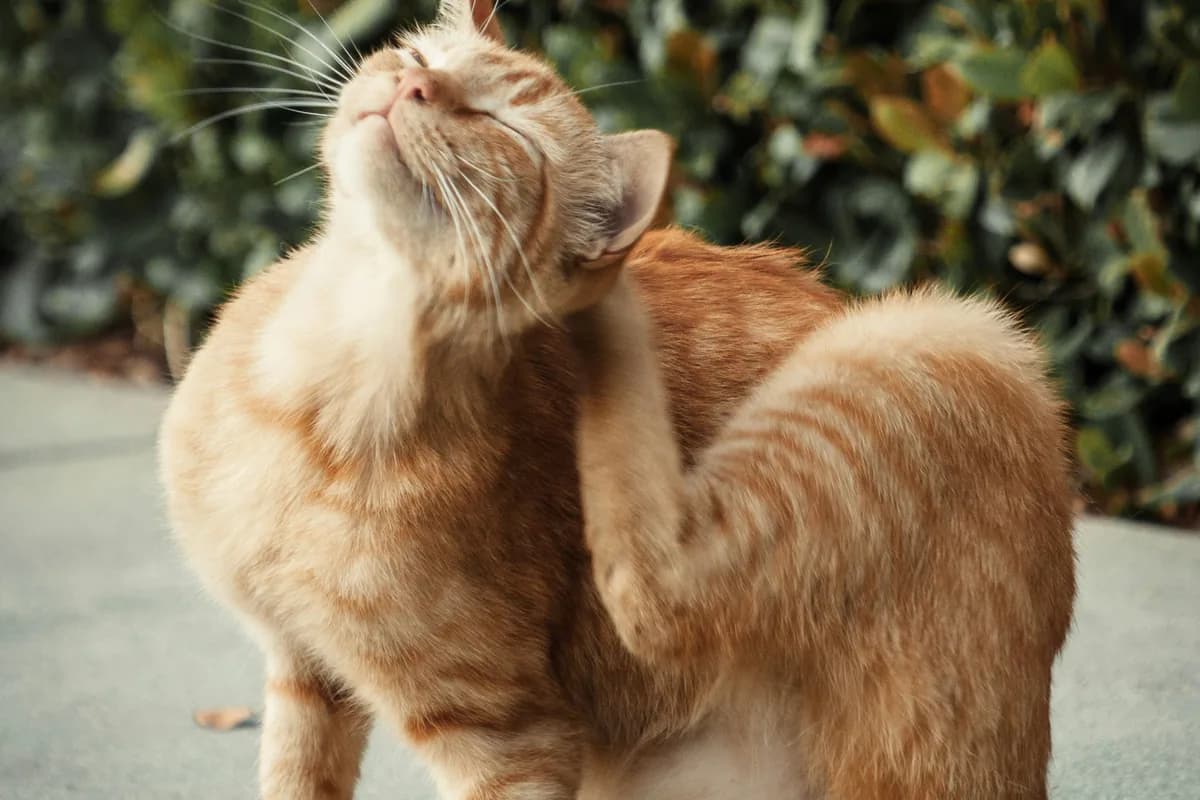
Head and neck scratching is classic for environmental allergies — focused around ears, under chin, sides of face, and neck.
Respiratory Symptoms
Cats are more likely than dogs to show respiratory allergy signs. Feline asthma symptoms include wheezing (often quiet), coughing that can resemble hairball hacking, laboured breathing, and extended neck during breathing. Open-mouth breathing is an emergency sign requiring immediate veterinary care.
Upper respiratory signs include frequent sneezing, clear nasal discharge, watery eyes, and congested-sounding breathing.
Behavioural Changes
Allergic discomfort may cause increased irritability, hiding or withdrawal, reduced appetite, reluctance to be touched (painful skin), and sleep disruption.
Breed Predispositions
Certain cat breeds develop allergies at significantly higher rates:
Siamese and Oriental breeds: Very high risk — 50-70% higher than mixed breeds, with 8-12% affected. Often have concurrent environmental and food allergies.
Sphynx cats: Very high risk — 60-80% higher than average. No fur barrier means symptoms are immediately visible on skin.
Persians: High risk — 40-60% higher. Brachycephalic (flat-faced) anatomy compounds respiratory allergies.
Devon Rex: High risk due to thin coat providing less barrier protection.
Abyssinians: Moderate-high risk with documented genetic predisposition.
The Food Allergy Connection
40-50% of cats with environmental allergies also have food allergies. This dual sensitivity compounds symptoms and complicates treatment.
Signs that food allergies may be involved: year-round symptoms without seasonal variation, gastrointestinal issues (vomiting, diarrhea, soft stool), itching concentrated around head, face, and neck, poor response to environmental allergy treatment alone, and symptoms that started after a diet change.
The most common feline food allergens are beef (18%), fish (17%), chicken (5%), dairy (4%), and wheat (5%). If food allergies are suspected, an 8-12 week elimination diet is the only reliable diagnostic method. For severe cases, prescription diets like Hill's z/d or Royal Canin HP provide hydrolyzed proteins that bypass the immune response. See the full cat food allergies guide for detailed diagnosis and food recommendations.
Not sure about ingredients? Try the free Pet Allergy Scanner — scan any pet food label for common allergens in seconds.
Treatment and Home Care
Environmental Management
Reducing allergen exposure helps all allergic cats: wash cat bedding weekly in hot water (130°F minimum), use HEPA air purifiers in rooms where your cat spends time, switch to low-dust unscented litter, vacuum frequently with a HEPA-filtered vacuum, remove or reduce scented products, and control humidity in the 40-50% range.
Medications
Corticosteroids are commonly used because cats tolerate steroids better than dogs, and they can be given orally, by injection, or as an inhaler for asthma. Long-term risks include diabetes (cats are particularly susceptible), weight gain, and immune suppression. Prednisolone is preferred over prednisone in cats.
Cyclosporine (Atopica) is FDA-approved for cats, given orally once daily, takes 4-6 weeks for full effect. Can be used long-term but may cause initial vomiting or decreased appetite.
Antihistamines are more effective in cats than dogs, though still limited. Chlorpheniramine (2-4 mg twice daily) is often most effective. Cetirizine (5 mg once daily) is easy to dose. Important: use only plain formulations — never products containing pseudoephedrine or decongestants.
Inhaled medications for allergic asthma: fluticasone (Flovent) via AeroKat chamber reduces the need for systemic steroids with fewer whole-body side effects.
Immunotherapy (allergy shots or sublingual drops) shows improvement in 60-75% of cats but takes 6-12 months for effect and requires allergy testing first.
Home Care
Bathing: While cats famously dislike water, bathing removes allergens from fur. Use cat-specific hypoallergenic shampoo, work quickly but calmly, and dry completely. Every 2-4 weeks during flare-ups. For cats who won't tolerate baths, try hypoallergenic pet wipes or damp cloth wipe-downs.
Stress reduction: Stress exacerbates allergic symptoms. Maintain consistent routines, provide vertical spaces and hiding spots, use pheromone diffusers (Feliway), and ensure adequate resources in multi-cat homes.
Managing feline asthma: Remove triggers (smoking, scented products, dusty litter), maintain inhaled medications as prescribed, learn normal respiratory rate (20-30 breaths per minute at rest), and know emergency signs (open-mouth breathing, blue gums). Have an emergency plan and know your emergency vet's location.
When to seek veterinary care: Difficulty breathing or open-mouth breathing (emergency), new or worsening skin lesions, significant hair loss, facial swelling, severe scratching causing wounds, ear problems, decreased appetite or lethargy.
Honest Take
The pattern I keep seeing: About 12-15% of cats suffer from environmental allergies, and cats with allergies are 50-70% more likely to also have food sensitivities. The research consistently shows this overlap, yet most owners — and some vets — treat environmental and food allergies separately rather than addressing both. If your cat has been over-grooming to the point of bald patches, or chronic sneezing has been dismissed as "just a cat thing," allergies deserve proper investigation. The hidden nature of cat discomfort means many allergic cats suffer for years before getting appropriate treatment.
Sources & Further Reading
- Cornell Feline Health Center — feline health research and allergy guidance
- Merck Veterinary Manual — Feline Allergies — clinical reference for diagnosis and treatment of feline allergies
- Tufts Clinical Nutrition Service — evidence-based guidance on elimination diets and novel proteins
- AAFCO Consumer Resources — pet food labelling standards
- Journal of Feline Medicine and Surgery — peer-reviewed research on feline allergy prevalence and management
Related Articles
- Cat Food Allergies Guide
- Winter Allergies in Dogs and Cats
- Best Hypoallergenic Cat Foods
- Indoor Winter Allergens for Dogs
- Winter Skin Care for Dogs
Frequently Asked Questions
Why Does My Cat's Scratching Get Worse in Winter?
Winter forces cats indoors where they face concentrated exposure to dust mites, mold, and chemical irritants from heating systems, candles, and cleaning products. Closed windows trap allergens inside, and dry heated air irritates skin and respiratory passages. Cats who go outdoors in warmer months lose that "break" from indoor allergens during winter.
Can Indoor Cats Have Seasonal Allergies?
Yes, but the pattern is reversed from what you'd expect. Indoor cats may actually show worse symptoms in winter (when windows are closed and indoor allergens concentrate) rather than spring/summer. Dust mite populations also peak in warmer, more humid conditions — but heating systems can stir up settled dust.
How Do I Tell if My Cat's Overgrooming Is Allergies or Stress?
Both cause similar hair loss patterns, but there are differences. Allergic overgrooming usually comes with other symptoms — miliary dermatitis, ear problems, or respiratory signs. Stress-related grooming typically correlates with environmental changes (new pet, move, schedule change) and occurs in the absence of skin inflammation. A veterinary exam can distinguish between the two.
Should I Switch to Dust-Free Cat Litter?
If your cat has environmental allergies, switching to a low-dust, unscented litter is one of the easiest and most impactful changes. Clay litters produce significant dust that cats inhale while digging and ingest during grooming. Paper-based, pine, or crystal litters produce less dust. Avoid scented litters entirely — the added fragrances are additional irritants.
Can My Cat Be Allergic to My Other Pets?
Yes. Cats can develop allergies to dog dander, other cats' dander, bird dander, and small mammal dander (hamsters, guinea pigs, rabbits). In multi-pet households, this cross-species allergy can be difficult to identify because the allergen source is always present. An intradermal allergy test by a veterinary dermatologist can identify specific animal dander sensitivities.
How Do I Know if Food Allergies Are Contributing to My Cat's Winter Symptoms?
The key indicator is that symptoms persist year-round without seasonal variation, even when environmental allergens are controlled. If environmental management (HEPA filters, dust-free litter, removing irritants) doesn't fully resolve symptoms, food allergies may be compounding the problem. An 8-12 week elimination diet is the only reliable way to confirm — see the cat food allergies guide for the full protocol.
Is your pet's food safe?
Upload a photo of any pet food label and find out what's safe in seconds.
Try free scanFound this useful? Save it or share it with another pet owner.
Continue Reading
Winter Allergies in Dogs and Cats: Signs Your Pet Is Suffering
Winter allergies in dogs and cats covering indoor allergens like dust mites and mold, breed-specific risks, and how food allergies compound winter symptoms.
Why Is My Dog Itchy in Winter? Hidden Indoor Allergens Explained
Your dog survived pollen season, but now scratches more than ever. The answer lies in hidden indoor allergens that thrive when homes are sealed against cold.

Cat Food Allergies: Symptoms, Diagnosis & Treatment Guide
Cat food allergies affect 10-15% of cats with skin problems, causing itching, hair loss, and ear infections. How to identify and treat feline allergies.
Best Hypoallergenic Cat Foods: Complete Buyer's Guide
Fish is the #1 cat food allergen at 23% — not chicken or beef. Compare 5 hypoallergenic cat foods from hydrolyzed prescriptions to novel protein LID options.