Reading Dog Food Labels: 5 Hidden Allergen Traps to Watch
The phrase 'natural flavor' on a label could mean chicken. 'Animal fat' could be anything. Master ingredient label reading to protect your allergic dog.
By Gary — 7+ years managing my Cockapoo's food allergies. Sources cited below.
11 min read
Affiliate disclosure: When a recommendation links to a retailer, that's usually an affiliate link — your purchase price stays the same and a slice helps cover the site's running costs.

By Gary, founder of Pet Allergy Scanner. 7+ years managing pet food allergies with my Cockapoo.
Dog food labels use vague terms that manufacturers can interpret loosely — "natural flavor," "poultry fat," "animal digest." For dogs with food allergies, this ambiguity is dangerous. A single hidden allergen in an ingredient that looks unfamiliar can trigger weeks of symptoms. This guide decodes ingredient names, identifies hidden allergen sources, and teaches a systematic approach to label reading that protects allergic dogs.
Quick Answer: Dog food labels hide allergens behind vague terms — "natural flavor" is often chicken, "animal fat" could be any species, and "poultry by-product meal" could be chicken or turkey. For allergic dogs, every form of the allergen must be identified: meat, meal, by-product, fat, and digest all contain triggering proteins. The safest labels name specific single protein sources with matching fat sources (e.g., "duck" and "duck fat") and avoid vague terms entirely. Use the free Pet Allergy Scanner to check labels instantly. For more on allergen patterns, see the top 10 dog food allergens guide.
What Do FDA and AAFCO Require on Labels?
The FDA's Center for Veterinary Medicine and state feed control officials (through AAFCO — Association of American Feed Control Officials) regulate pet food labeling. Required elements include the product name, net quantity, manufacturer information, ingredient list in descending order by pre-cooking weight, guaranteed analysis (minimum/maximum nutrient percentages), nutritional adequacy statement, and feeding directions.
What is not required is more important for allergy management. The FDA does not mandate exact ingredient sources, processing methods, facility information, cross-contamination disclosures, or country of origin for individual ingredients.
Ingredients must be listed by pre-cooking weight, which creates confusion. Fresh "chicken" listed first is 70% water — after cooking, it drops significantly in actual content. "Chicken meal" (dehydrated) may actually provide more protein. For allergy purposes, placement matters less than presence: if chicken appears anywhere on the list, the food contains chicken.
Some terms have legal definitions: "complete and balanced," "all life stages," and specific nutrient claims. Marketing terms like "natural," "holistic," "premium," "human-grade," and "gourmet" have no regulated meaning. For allergies, ignore marketing entirely and focus only on the ingredient list.
What Do Ingredient Names Really Mean?
Protein Sources
Named proteins (chicken, beef, lamb, salmon, duck, venison, rabbit) indicate exactly what they say. Vague terms are the problem: "meat" could be beef, pork, lamb, goat, or any mammal. "Fish" could be any species and may change batch to batch. "Animal" as in "animal fat" or "animal digest" means literally any animal — most commonly beef or pork, but it provides no transparency. If an ingredient does not name a specific animal, avoid it for any dog with protein allergies.
Meal, By-Product, and Digest
"Chicken meal" is chicken rendered to remove moisture — concentrated protein that still triggers chicken allergies. "Chicken by-product meal" includes rendered organs, feet, and heads — still chicken protein that triggers reactions. "Chicken digest" is chemically broken-down chicken used as flavoring — still contains triggering proteins. "Poultry by-product meal" is by-products from unspecified poultry — could be chicken, turkey, or both. "Meat and bone meal" does not specify which mammals — avoid for any mammal protein allergy.
Fat Sources
Fats often contain trace proteins that trigger allergies. "Chicken fat" contains trace chicken proteins and often triggers reactions in chicken-allergic dogs. "Poultry fat" has the same concerns with less transparency. "Animal fat" means fat from any animal source — high risk. "Fish oil" is usually from multiple species. The safest approach: choose foods where the fat source matches the named protein (e.g., "duck fat" in a duck formula).
Hidden Allergen Terms
"Natural flavor" is most commonly derived from chicken or beef. A "lamb and rice" formula can legally contain chicken-derived natural flavor. AAFCO does not require manufacturers to specify flavor sources. For allergic dogs, "natural flavor" is a red flag — contact the manufacturer for the source or choose foods without this ingredient.
"Hydrolyzed protein" means proteins broken into peptides too small for immune recognition. Prescription hydrolyzed diets (Hill's z/d, Royal Canin HP) break proteins down thoroughly. Non-prescription "hydrolyzed protein" may not be broken down enough to prevent reactions. When labels do not specify the protein source, prescription hydrolyzed diets usually use soy (Royal Canin) or chicken (Hill's z/d) — contact the manufacturer to verify.
Hidden dairy includes whey, casein, lactose, butter, milk solids, and curds — all trigger dairy allergies. For the complete list of hidden allergen names, see the how to read pet food labels guide.
Take action today: Use the free Pet Allergy Scanner to check your current pet food for hidden allergens and find safer alternatives.
How Do You Read Labels for Specific Allergies?
Chicken Allergies
Obvious sources: chicken, chicken meal, chicken by-product meal, chicken fat, chicken liver, chicken broth. Hidden sources: anything with "poultry," "natural flavor" (often chicken), "animal fat" (often chicken or beef), and "meat" in treats (often chicken). Chicken is the most common food allergen at 15-20% of cases, and it hides in more products than any other protein. For more details, see the chicken allergy guide.
Beef Allergies
Obvious sources: beef, beef meal, beef by-products, beef fat or tallow, beef liver. Hidden sources: "meat" meal (often beef), "meat" by-products, "meat and bone meal," "animal fat" (often beef or pork), "natural flavor" (sometimes beef), and gelatin (often beef-derived).
Dairy Allergies
Obvious sources: milk, cheese, yogurt, buttermilk. Hidden sources: whey, casein, lactose, curds, milk solids, butter, cream. Even small amounts trigger reactions. Dairy hides in more products than most owners realize.
Grain Allergies
Wheat-specific: wheat, wheat flour, wheat gluten, wheat germ, wheat bran. Other grains: corn, corn meal, corn gluten; barley; oats. Rice is usually well-tolerated but can rarely cause allergies. "Grain-free" only means grains are absent — the food can still contain common protein allergens.
Not sure about ingredients? Try the free Pet Allergy Scanner — scan any pet food label for common allergens in seconds.
What Red Flags Should You Watch For?
Immediate Disqualifiers
If any of these appear, move to the next option: the dog's known allergens (check every time — product names do not guarantee absence), "meat" or "poultry" without naming a species, multiple protein sources (harder to manage reactions), "natural flavor" from an uncooperative manufacturer, "animal" anything (fat, digest — no transparency), and generic or unclear ingredient sources.
Warning Signs Requiring Investigation
Contact the manufacturer about: natural flavors (could be safe if plant-based), fish oil (sometimes tolerated despite fish allergies), "mixed tocopherols" (usually plant-sourced but verify), and any unrecognized ingredient.
Questions for Manufacturers
When labels are ambiguous, contact the manufacturer and ask: "What is the source of 'natural flavor' in this specific product?" — get a specific answer. "What other products are manufactured on the same equipment?" — reveals cross-contamination risk. "How thoroughly is equipment cleaned between runs?" — some companies have dedicated single-protein lines. "Does your chicken fat contain any chicken protein?" — rendering processes vary. "Have there been any recent formula changes?" — manufacturers reformulate without obvious label changes.
Good signs in manufacturer responses: specific detailed answers, transparency about ingredients, willingness to provide information. Red flags: vague responses, refusal to disclose sources, "trade secret" claims for basic ingredients. If a manufacturer will not provide clear answers, choose a different brand.
When Formulas Change
Check the ingredient list with every new bag purchase. Signs of formula changes include different bag design, ingredients in a different order, "new and improved" marketing, and — most telling — the dog suddenly reacting to previously safe food. Having 2-3 confirmed safe brands provides backup options when a formula changes. If a formula adds an allergen, stop feeding immediately, contact the manufacturer to verify, and find an alternative using the elimination diet process.
How Do You Build a Label Reading Strategy?
The Three-Pass Method
Pass 1 — Scan for protein sources. Go through the entire ingredient list checking for any mention of the dog's allergens in all forms: meat, meal, by-product, fat, and digest.
Pass 2 — Check ambiguous terms. Look for vague terms that could hide allergens: "natural flavors," anything with "animal," anything with "meat," anything with "poultry."
Pass 3 — Check unexpected locations. Vitamins and minerals sometimes have protein carriers. Preservatives and any unrecognized ingredient deserve scrutiny.
If any pass raises questions, contact the manufacturer or choose a different food.
Building Safe and Avoid Lists
The "avoid" list should include the confirmed allergen, all forms of that allergen (e.g., chicken, chicken meal, chicken by-product, chicken fat, chicken digest), vague terms that could contain it, and cross-reactive proteins (e.g., turkey if chicken-allergic — 55-60% cross-reactivity). The "safe" list should only include proteins and ingredients the dog has tolerated during elimination trials. For help identifying your dog's safe foods, see the dog elimination diet guide.
The Protein Count Approach
Count how many distinct protein sources a food contains. A label reading "duck, duck meal, peas, sweet potato, duck fat" has a protein count of 1 — all duck. A label reading "salmon, salmon meal, potatoes, salmon oil, salt" is also 1. A label reading "lamb, rice, chicken fat, dried egg, natural flavor" has at least 3 — lamb, chicken (in the fat), and egg. For allergic dogs, lower protein source count means easier allergy management. For more on choosing appropriate foods, see the limited ingredient dog food comparison.
Keeping a Food Log
Track every food tried, photograph or record full ingredient lists, document the dog's response in a symptom diary, note manufacturing dates and lot numbers, and record any reactions. This log identifies patterns, catches formula changes, provides data for the veterinarian, and creates a reliable reference when symptoms recur.
Practical Label Comparisons
Evaluating "Limited Ingredient" Claims
Some brands' "limited ingredient" means 3-5 main ingredients — single protein source, single carbohydrate, minimal additives. Others use the term with 10-15 ingredients, multiple protein sources, and "natural flavor." Always count ingredients yourself rather than trusting marketing claims.
Food A: "Duck, duck meal, sweet potatoes, peas, duck fat, flaxseed, natural flavor..." — single protein (duck), simple carbohydrates, matching fat source. The concern: "natural flavor" needs manufacturer verification.
Food B: "Salmon, salmon meal, potatoes, salmon oil, salt, mixed tocopherols" — single protein (salmon), simple carbohydrates, matching fat source, no ambiguous ingredients. This is the safer option for clarity.
Hidden Allergen Detection
A food marketed as "Lamb Formula" lists: "Lamb, rice, chicken fat, dried egg, natural flavor..." — this contains chicken (in the fat), egg, and unknown "natural flavor." It is not suitable for chicken-allergic dogs despite the "lamb formula" name. Product names do not guarantee allergen absence. Always read the full ingredient list.
"Novel Protein" Claims
True novel proteins include venison, rabbit, kangaroo, and alligator. Lamb and salmon are sometimes marketed as "novel" but are increasingly common in commercial foods. For allergy management, "novel" only matters if the individual dog has never eaten that protein. A dog that ate lamb for years before developing allergies cannot use lamb as a novel protein.
Honest Take
For an allergic dog, label reading is core competence — not optional extra. The single most common reason elimination diets fail isn't the diet itself; it's accidental allergen exposure from ingredients the owner didn't recognise. "Natural flavour" alone has probably undermined more allergy management plans than any other single ingredient on the panel.
The safest labels are the simplest: single named protein, matching named fat source, zero vague catch-all terms ("animal fat", "meat and animal derivatives", "natural flavour"). If a label requires phoning the manufacturer to figure out what's in it, a clearer alternative almost always exists. Default to the boring panel.
Sources & Further Reading
- American Kennel Club — Dog Food Labels — label reading guidance and nutrition information
- AAFCO — Pet Food Labeling — regulatory definitions and labeling requirements for pet food
- FDA — Pet Food Labels — federal labeling requirements and ingredient definitions
- Tufts University Veterinary Nutrition — evidence-based pet food label interpretation
- Merck Veterinary Manual — Nutrition — clinical reference for dietary management and ingredient safety
Related Articles
- Best Dog Food for Allergies
- How to Read Pet Food Labels
- Top 10 Dog Food Allergens
- Hypoallergenic Pet Food Guide
- Limited Ingredient Dog Food Comparison
Frequently Asked Questions
Does "Grain-Free" Mean Hypoallergenic?
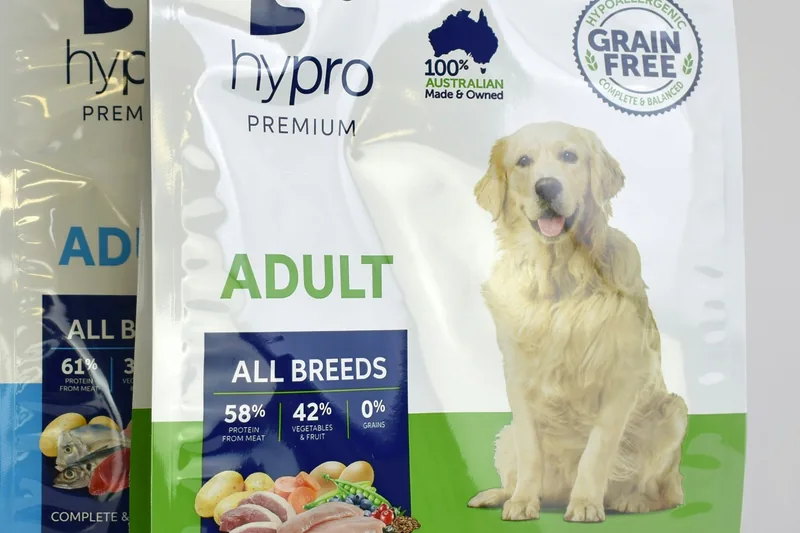
No. "Grain-free" only means the food lacks grains — it can still contain common protein allergens like chicken or beef. Grain-free only matters if grains are the dog's specific allergen. Most food allergies are to proteins, not grains.
Can Manufacturers Change Formulas Without Changing Labels?
Manufacturers are required to update labels when changing formulas, but there can be lag time. Old bags with old labels may still be sold while the new formula is being produced. Check ingredient lists with every new bag and watch for subtle changes.
How Do You Verify a "Limited Ingredient" Claim?
Count the ingredients yourself — do not trust the marketing claim. Some brands' "limited ingredient" means 3-5 main ingredients with a single protein source, which is genuinely limited. Others use the term with 10-15 ingredients and multiple protein sources. The ingredient list is the only reliable source of truth.
Can Cross-Contamination Cause Reactions Even If the Ingredient Is Not Listed?
Yes. If a facility manufactures chicken-based food on the same equipment as a fish-based food, trace chicken proteins can contaminate the fish product. Contact manufacturers to ask about shared equipment and cleaning protocols. Some companies use dedicated lines for single proteins, which significantly reduces this risk.
How Often Should You Re-Read Labels on Food You Already Buy?
Check the ingredient list with every new bag. Manufacturers can reformulate at any time, and the dog suddenly reacting to a previously safe food is often the first sign that ingredients have changed. Photographing the ingredient list from each purchase makes it easy to compare.
Do Prescription Hypoallergenic Foods Still Require Label Reading?
Yes, though they carry less risk. Prescription hydrolyzed diets like Hill's z/d and Royal Canin HP use proteins broken down too small to trigger most reactions. However, some dogs still react to the source protein, and prescription foods can also be reformulated. Always verify ingredients and discuss the specific protein source with the prescribing veterinarian.
Is your pet's food safe?
Upload a photo of any pet food label and find out what's safe in seconds.
Try free scanFound this useful? Save it or share it with another pet owner.
Continue Reading
How to Read Pet Food Labels for Allergens
Learn to decode pet food labels and spot hidden allergens. Understand AAFCO regulations, ingredient list tricks, and vague terms that conceal common triggers.

Top 10 Dog Food Allergens: Ingredients to Avoid
The top 10 dog food allergens ranked by frequency, from chicken and beef to lesser-known triggers like lamb and pork. Hidden sources and safe alternatives.

Hypoallergenic Pet Food: Complete Buying Guide
The term hypoallergenic is a marketing myth with no official definition in pet food. Learn what actually works: novel proteins, hydrolyzed diets, and LID foods.

Best Dog Food for Allergies: Complete Guide & Reviews
Beef and chicken cause 65%+ of canine food allergies. Compare 10 limited ingredient, hydrolyzed, and novel protein diets with the exact foods vets recommend.
Cite this article
Gary Innes. (2026). Reading Dog Food Labels: 5 Hidden Allergen Traps to Watch. Pet Allergy Scanner. Retrieved 2026-07-06T22:16:44.000Z from https://petallergyscanner.com/blog/reading-dog-food-labels-allergies-ingredient-guide/
For other citation styles or to embed our tools, see the press & citations page.
About the author — Gary Innes
Gary is a UK pet owner who built Pet Allergy Scanner after 7+ years navigating his Cockapoo's chronic food allergy — a dog whose safe diet has narrowed to salmon, venison and vegetables. He is not a veterinarian and has no veterinary or nutrition qualifications. Every article on the site is owner-to-owner research that cites primary veterinary sources (Mueller et al. BMC Vet Res 2016, ACVD, Merck Vet Manual) and defers diagnostic and treatment decisions to a vet.
Read more about Pet Allergy Scanner's editorial standards →