How to Read Pet Food Labels for Allergens
Learn to decode pet food labels and spot hidden allergens. Understand AAFCO regulations, ingredient list tricks, and vague terms that conceal common triggers.
By Gary — 7+ years managing my Cockapoo's food allergies. Sources cited below.
12 min read
Affiliate disclosure: A handful of the product links in this article are affiliate links. They cost you nothing extra and help fund the scanner tool.
By Gary, founder of Pet Allergy Scanner. 7+ years managing pet food allergies with my Cockapoo.
Pet food labels are designed to sell, not to inform. Allergens hide under vague terms that manufacturers aren't required to specify, and front-of-bag marketing claims follow rules most owners don't know. This guide teaches exactly what to look for, which terms to flag, and how to shop safely for a pet with food allergies.
Quick Answer: Pet food labels hide allergens under vague terms — "natural flavors" often contains chicken or beef, "animal fat" could be any protein, and "meat meal" allows batch-to-batch changes without label updates. The first 5 ingredients make up roughly 80% of the food, but allergens lurk throughout the full list in fats and flavorings. AAFCO naming rules mean "Chicken Dinner" only requires 25% chicken while "With Chicken" requires just 3%. Always read the full ingredient list, learn each allergen's hidden aliases, and contact manufacturers when labels use vague terms.
How Are Pet Food Labels Regulated?
The Association of American Feed Control Officials (AAFCO) sets ingredient naming standards and nutritional adequacy requirements for pet food sold in the US. However, AAFCO rules have significant gaps for allergy-prone pets. Ingredients are listed by weight before cooking, which can be misleading — "chicken" listed first (70% water) may actually contribute less protein than "chicken meal" listed second (only 10% water). Terms like "natural," "holistic," and "premium" have no official definition or regulation. Manufacturers can change ingredient sources within vague categories ("animal fat," "meat meal") without updating the label. There is no requirement to disclose cross-contamination risks from shared manufacturing equipment. Understanding these gaps is the first step to reading labels effectively.
UK and EU Labelling Rules — Different Game
UK pet food is regulated under the Feed Marketing Regulations (retained EU Regulation 767/2009 and 68/2013), enforced by Trading Standards and DEFRA. The Pet Food Manufacturers' Association (PFMA) runs a voluntary best-practice code that most major brands follow.
The key differences from the US:
| Issue | US (AAFCO) | UK / EU | |---|---|---| | Product name rule | "Chicken Dog Food" = 95% chicken | "Chicken" in the name = 26% chicken minimum, by EU Regulation 767/2009 | | "With" rule | "With Chicken" = 3% chicken | "With Chicken" = 4% chicken minimum | | Catch-all ingredient term | "Meat meal", "animal fat" | "Meat and animal derivatives" — even broader; covers any mammal or bird | | "Various sugars" | Rarely seen | Common UK term covering glucose, sucrose, dextrose etc. | | Recall alerts | FDA pet food recall page | UK Food Standards Agency (FSA) — search "pet food" alerts |
"Meat and animal derivatives" is the single most allergen-hostile term in UK pet food. It can legally contain any combination of chicken, beef, lamb, pork, or other species, in any ratio, changed between batches without notice. A UK label saying "meat and animal derivatives (min. 4% chicken)" tells you what 4% of the protein is — and nothing about the other 96%. For a pet with a confirmed protein allergy, treat that phrase as a hard pass.
UK labels also typically use category labelling ("meat and animal derivatives", "cereals", "oils and fats") rather than ingredient labelling ("chicken meal, rice, sunflower oil"). Brands must offer ingredient labelling on request — phone or email the manufacturer if the bag only shows categories.
Where Do Allergens Hide in Ingredient Lists?
Reading Order and Weight Tricks
The first 5 ingredients typically make up 80% or more of the food, so focus attention there first — but don't stop scanning the rest of the list. Allergens frequently appear further down in fats, flavorings, and supplements. A common manufacturing trick is listing "chicken" first (which is 70% water) before "chicken meal" (10% water). After cooking, the concentrated meal may actually be the dominant ingredient.
Common Allergens and Their Hidden Names
Allergens are rarely listed clearly. Each major allergen has multiple aliases:
| Allergen | Hidden Names to Scan For | | --- | --- | | Chicken | Poultry, poultry meal, poultry by-products, natural flavors (often chicken), chicken digest, chicken fat | | Beef | Meat meal (unspecified), meat and bone meal, animal fat (could be beef), beef tallow, beef digest, natural flavors | | Fish | Fish meal (unspecified), ocean fish, fish digest, marine protein, omega-3 supplement (may be fish-derived) | | Dairy | Whey, casein, milk protein, lactose, cheese powder, dried milk product |
Red Flag Vague Terms
These terms should raise immediate concern because they allow manufacturers to conceal common allergens. "Natural flavors" or "artificial flavors" can contain any number of allergens — manufacturers are not required to specify the source, and these are often chicken or beef-based. "Animal fat" or "animal digest" have unclear sources that could be chicken, beef, pork, or others — avoid if the pet has protein allergies. "Meat meal" or "meat by-products" use unspecified meat sources, allowing the manufacturer to change the source from batch to batch based on cost without changing the label. "Poultry" or "fish" as broad terms mean the product could contain any combination of species.
Take action today: Use the free Pet Allergy Scanner to check your current pet food for hidden allergens and find safer alternatives.
What Do Label Claims Actually Mean?
Pet food marketing relies on specific AAFCO naming rules that are easily misinterpreted:
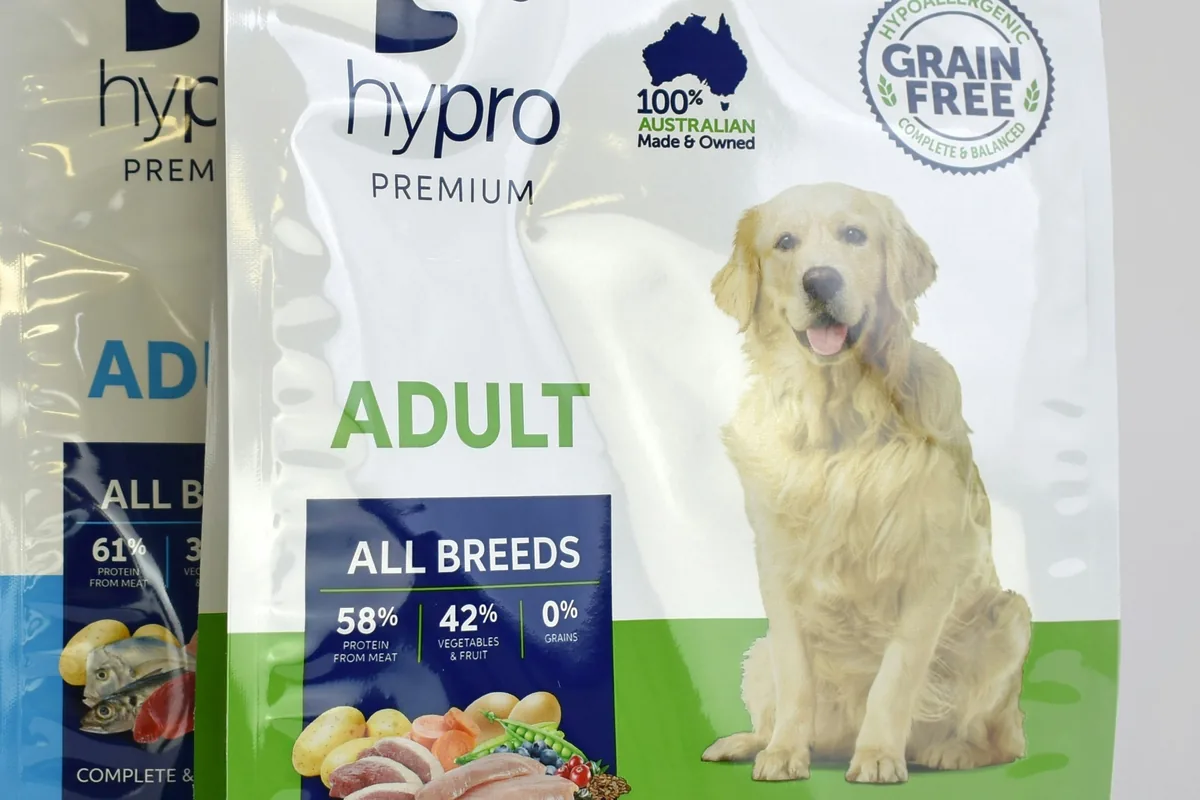
| Label Claim | What It Actually Means | Danger Zone | | --- | --- | --- | | "Chicken Dog Food" | Chicken must be at least 95% of total ingredients | Generally safe (if chicken is safe for the pet) | | "Chicken Dinner/Entree" | Chicken must be at least 25% of total ingredients | Can contain up to 75% other proteins and ingredients | | "With Chicken" | Only 3% chicken required | The food is mostly other ingredients and proteins | | "Chicken Flavor" | Must have a detectable taste | Could be just digest or oil, not actual meat | | "Grain-Free" | No wheat, corn, rice, etc. | Does NOT mean hypoallergenic — proteins are still the most common allergens | | "Hypoallergenic" | No official definition — marketing term | Always check the ingredients regardless | | "Limited Ingredient Diet" | Fewer ingredients than typical food | Look for a single protein and single carbohydrate, ideally under 10 total ingredients |
The gap between "Chicken Dog Food" (95% chicken) and "With Chicken" (3% chicken) is enormous — yet both feature chicken prominently on the bag. For allergy-prone pets, these distinctions determine whether a food is safe or dangerous. For more on choosing the right food, see the best dog food for allergies guide.
Not sure about ingredients? Try the free Pet Allergy Scanner — scan any pet food label for common allergens in seconds.
How Should You Shop for Allergy-Safe Pet Food?
Step-by-Step Label Reading
Read the ingredient list first — not the front of the bag. Check the first 5 ingredients for allergens or vague terms. Scan the entire remaining list, paying special attention to fats and flavorings where allergens hide. Look for a single named protein source (the simplest approach for allergy management). Compare every new bag to the previous one — formulas change without major notification. Taking a photo of the safe ingredient list makes comparison easier.
Questions to Ask Manufacturers
Contact customer service directly when labels use vague terms. Key questions include what exactly is in the "natural flavors," what the specific source of the animal fat is, and whether the formula is manufactured in a facility that also processes the pet's known allergen. Red flags include unwillingness or inability to provide clear answers.
Wet Food vs Dry Food
Wet food (70-80% moisture) often has simpler formulas and makes finding single-protein options easier. Dry food (10-12% moisture) is more concentrated with more complex formulas — check fat sources carefully, as these are where hidden allergens most often appear. For a detailed food comparison, see the limited ingredient dog food comparison.
Reading the Guaranteed Analysis Panel
Every pet food has a side panel with minimum percentages of crude protein, crude fat, crude fibre, and moisture. For allergy diagnosis, this panel is less useful than people assume — "crude protein 25%" tells you the total protein quantity, not which protein. Two foods with identical guaranteed analyses can have completely different ingredient lists.
Where the panel does help: comparing density. A 12% moisture kibble at 30% crude protein is delivering more actual protein per gram than a 28% protein wet food at 75% moisture. Multiply the protein figure by (100 / (100 - moisture %)) to get a dry-matter comparison number. This matters for managing weight on a hydrolyzed prescription diet (often lower in protein than typical kibble), where small calorie shifts add up.
Treat, Chew, and Medication Labels
The single biggest reason elimination diets fail is a treat, chew, or flavoured medication breaking the trial. These products get less attention than food labels but follow the same vague-term playbook:
- Dental chews (Greenies, Whimzees, Pedigree Dentastix) — most contain wheat, gelatin, and "natural flavors" that are often poultry-derived. The "veterinary" or "dental health" labelling doesn't exempt them from the allergen rules.
- Pill pockets and pill paste — Greenies Pill Pockets, Tomlyn pill paste — almost universally contain chicken, beef, or pork bases. Hide pills in a tiny bit of allergen-safe wet food instead, or ask your vet for a compounding pharmacy to make a flavour-free version.
- Flavoured monthly parasite treatments — Bravecto, NexGard, Simparica, Credelio all come as flavoured chewables containing meat protein. Ask for the topical (spot-on) version instead during an elimination diet; the active ingredient is the same.
- Joint supplements and dental water additives — frequently chicken-flavoured. Read every container, every time.
- Training treats — small treats given dozens of times a day add up to a meaningful exposure. A single 1-gram chicken liver treat 30 times in a week is 30 grams of allergen.
How to Phone a Manufacturer — Exact Questions
"Contact the manufacturer" gets repeated everywhere, but the call rarely yields anything useful unless you ask the right questions. The script that works (used verbatim):
"I'm calling because my dog has a confirmed food allergy and I need to know:
- What animal source is in the 'natural flavors' / 'animal fat' / 'meat and animal derivatives' in product [name + batch code]?
- Has the source changed in the last 6 months, and if so, when?
- Is this product made on a line that also processes [allergen]?
- Are there any planned reformulations in the next 90 days?"
Get the answer in writing if possible — a follow-up email summarising the call protects you if the formula changes. If a brand can't or won't answer question 1, that brand is not safe for an allergic pet, regardless of how good the front of the bag looks.
How Do You Avoid Common Label Reading Mistakes?
Trusting the front of the bag is the most common mistake — a "Salmon Dog Food" can still contain chicken meal further down the ingredient list. Assuming grain-free means hypoallergenic leads many owners to buy expensive grain-free foods while the dog continues eating the actual allergen (usually a protein like chicken or beef). Stopping after the first 5 ingredients misses allergens hiding in fats, flavorings, and supplements further down the list. Trusting "hypoallergenic" without verification is risky because the term is completely unregulated. Not checking every new bag leaves owners vulnerable to formula changes that introduce allergens.
These mistakes are compounded during an elimination diet, where even trace exposure to the allergen invalidates the trial. During elimination diets, every ingredient in every product — food, treats, dental chews, and flavored medications — must be verified.
Honest Take
Most food allergy diagnoses ultimately come down to label reading. A "salmon" food containing chicken fat at ingredient 14 reads as a salmon food on the front of the bag and as a chicken-allergic dog's failed trial in the kitchen. The allergen alias table above earns its place in any owner's saved-on-phone reference list.
The AAFCO/EU naming rules matter as much as the ingredient panel — the difference between "Chicken Dog Food" (95%+ chicken), "Chicken Dinner" (25% minimum), and "With Chicken" (3% US / 4% EU) sits on nearly identical-looking bags on the shop shelf. The naming convention is your first filter; the panel is your verification.
Sources & Further Reading
- AAFCO — Pet Food Labeling — official ingredient naming standards and label claim regulations
- FDA — Pet Food Labels — federal labeling requirements and compliance guidance
- American Kennel Club — Reading Dog Food Labels — practical guide to ingredient lists and marketing claims
- Tufts University Veterinary Nutrition — evidence-based pet nutrition and label interpretation guidance
- Merck Veterinary Manual — Pet Nutrition — clinical reference for dietary management and ingredient safety
Related Articles
- Best Dog Food for Allergies
- Reading Dog Food Labels for Allergies
- Top 10 Dog Food Allergens
- Hypoallergenic Pet Food Guide
- Limited Ingredient Dog Food Comparison
Frequently Asked Questions
Does "Natural Flavors" Always Contain Allergens?
Not always, but frequently. "Natural flavors" is one of the vaguest terms on pet food labels — it can derive from any animal or plant source. Chicken and beef are the most common bases. Manufacturers are not required to specify the source. If the pet has food allergies, contact the manufacturer directly to confirm what's in the natural flavors before feeding.
Is "Grain-Free" the Same as Hypoallergenic?
No. Grain-free simply means no wheat, corn, rice, or other grains. Most food allergies in dogs are caused by proteins (chicken, beef, dairy), not grains. The FDA also investigated potential links between grain-free diets and heart disease in dogs. Focus on identifying the specific allergen through an elimination diet rather than eliminating grains by default.
Can Pet Food Formulas Change Without Notice?
Yes. Manufacturers can change ingredient sources within vague categories like "animal fat" or "meat meal" without updating the label. Even named ingredients may shift between batches. Always compare the ingredient list on every new bag to the previous one, and take photos of safe ingredient lists for easy reference.
How Do You Read Labels During an Elimination Diet?
During an elimination diet, every single ingredient in every product must be verified — food, treats, dental chews, supplements, and flavored medications. Look for single-named protein sources (not vague terms), contact manufacturers to confirm no cross-contamination, and avoid anything with "natural flavors" or "animal digest" unless the source is confirmed. For the complete protocol, see the dog elimination diet guide.
Should You Trust "Hypoallergenic" on Pet Food Labels?
No. "Hypoallergenic" has no official AAFCO or FDA definition — it's a marketing term. A food labeled hypoallergenic can still contain common allergens like chicken, beef, or dairy. Always read the full ingredient list regardless of front-of-bag claims. True hypoallergenic options include hydrolyzed protein diets (prescription) and verified limited ingredient diets with novel proteins.
Does Wet Food Have Fewer Hidden Allergens Than Dry Food?
Generally, yes. Wet food formulas tend to be simpler with fewer ingredients, making it easier to find genuinely single-protein options. Dry food often contains more complex formulas with added fats, flavorings, and supplements that can introduce hidden allergens. However, always read the full ingredient list regardless of food type — wet food is not automatically safe.
Is your pet's food safe?
Upload a photo of any pet food label and find out what's safe in seconds.
Try free scanFound this useful? Save it or share it with another pet owner.
Continue Reading

Reading Dog Food Labels: 5 Hidden Allergen Traps to Watch
The phrase 'natural flavor' on a label could mean chicken. 'Animal fat' could be anything. Master ingredient label reading to protect your allergic dog.

Top 10 Dog Food Allergens: Ingredients to Avoid
The top 10 dog food allergens ranked by frequency, from chicken and beef to lesser-known triggers like lamb and pork. Hidden sources and safe alternatives.

Hypoallergenic Pet Food: Complete Buying Guide
The term hypoallergenic is a marketing myth with no official definition in pet food. Learn what actually works: novel proteins, hydrolyzed diets, and LID foods.

Best Dog Food for Allergies: Complete Guide & Reviews
Beef and chicken cause 65%+ of canine food allergies. Compare 10 limited ingredient, hydrolyzed, and novel protein diets with the exact foods vets recommend.
Cite this article
Gary Innes. (2026). How to Read Pet Food Labels for Allergens. Pet Allergy Scanner. Retrieved 2026-07-06T22:16:44.000Z from https://petallergyscanner.com/blog/how-to-read-pet-food-labels/
For other citation styles or to embed our tools, see the press & citations page.
About the author — Gary Innes
Gary is a UK pet owner who built Pet Allergy Scanner after 7+ years navigating his Cockapoo's chronic food allergy — a dog whose safe diet has narrowed to salmon, venison and vegetables. He is not a veterinarian and has no veterinary or nutrition qualifications. Every article on the site is owner-to-owner research that cites primary veterinary sources (Mueller et al. BMC Vet Res 2016, ACVD, Merck Vet Manual) and defers diagnostic and treatment decisions to a vet.
Read more about Pet Allergy Scanner's editorial standards →