Cocker Spaniel Food Allergies: Ear Infections & Diet Solutions
Cocker Spaniels are 3-4x more likely to develop food allergies, with chronic ear infections as the hallmark sign. Diagnosis, best foods, and management.
By Gary — 7+ years managing my Cockapoo's food allergies. Sources cited below.
14 min read
Affiliate disclosure: If you click through and buy via one of the product links below, I earn a small commission. It's how the free scanner pays for itself.

By Gary, founder of Pet Allergy Scanner. 7+ years managing pet food allergies with my Cockapoo.
Your Cocker Spaniel's beautiful floppy ears might be adorable, but they're also a vulnerability. When food allergies cause inflammation and increased wax production, those long pendulous ears create warm, moist conditions where yeast and bacteria thrive. Chronic ear infections that keep coming back despite treatment are often the visible symptom of hidden food allergies wreaking havoc on the immune system.
Quick Answer: Cocker Spaniels rank in the top 5 breeds for food allergies (18-25% affected), primarily manifesting as chronic ear infections, skin inflammation, and digestive upset. The most common triggers are chicken (35-40%), beef (25-30%), and dairy (20-25%). Diagnosis requires an 8-12 week elimination diet with a novel protein. Treatment involves permanent allergen avoidance through limited ingredient diets like Wellness Simple Salmon or Taste of the Wild Pacific Stream.
Why Are Cocker Spaniels So Prone to Food Allergies?
Cocker Spaniels carry specific genetic markers that make their immune systems more reactive to certain proteins. They rank in the top 5 breeds for food allergies, with 18-25% developing food sensitivities — 3-4x higher than the average dog (5-7%). The American Cocker Spaniel shows higher allergy rates than their English Cocker cousins.
Their immune systems are overreactive. Cocker Spaniels develop what veterinarians call exaggerated immune responses — their bodies mistakenly identify harmless food proteins as dangerous invaders, triggering allergic reactions that manifest as skin inflammation, ear problems, and digestive distress.
The ear structure compounds everything. Their signature floppy ears create warm, moist environments inside the ear canals. When food allergies cause inflammation and increased wax production, the poor air circulation creates ideal conditions for yeast and bacterial infections. This is why ear infections are often the first noticeable sign of food allergies in Cocker Spaniels.
Historical breeding factors play a role. Decades of breeding for specific appearance traits — their distinctive ear shape and silky coat — may have inadvertently concentrated genes associated with allergic tendencies.
What Are the Symptoms of Food Allergies in Cocker Spaniels?
Ear Infections: The Hallmark Symptom
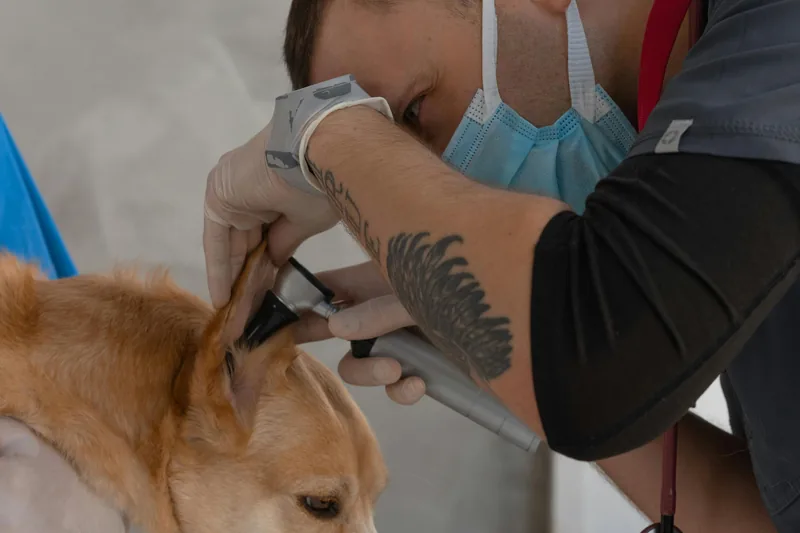
Chronic recurring ear infections are the most distinctive sign of food allergies in Cocker Spaniels — red inflamed ear canals, excessive wax with brown or yellow discharge, constant head shaking, ear scratching, foul yeasty odour, and flinching when ears are touched. Many Cocker owners spend months treating "ear infections" without realising food allergies are the underlying cause.
The critical indicator: If ear infections return every 4-8 weeks and come back shortly after antibiotics end, food allergy is very likely the cause. Food allergy-related ear infections typically involve yeast (Malassezia) in about 70% of cases.
Skin and Coat Symptoms
Intense itching concentrated on the paws (constant licking/chewing with brown saliva staining), face and muzzle, armpits and groin, and base of tail. Hot spots, hair loss in circular patches, skin thickening, darkened skin, and loss of the signature Cocker luster. Secondary bacterial and yeast skin infections are common complications.
Digestive Symptoms
Chronic soft stools or diarrhea, increased bowel movement frequency (3-4+ times daily), occasional vomiting, excessive gas, stomach gurgling, and decreased appetite.
Secondary Complications
Untreated food allergies can lead to chronic yeast infections (Malassezia), bacterial pyoderma, ear drum damage from chronic infections, behavioural changes from constant discomfort, and weight loss.
Year-Round vs Seasonal
Food allergies cause year-round symptoms with no seasonal pattern. If your Cocker only itches in spring and fall, environmental allergies are more likely. Year-round itching with recurring ear infections strongly points to food. For help distinguishing these, see the seasonal vs food allergies guide.
Take action today: Use the free Pet Allergy Scanner to check your current pet food for hidden allergens and find safer alternatives.
What Are the Most Common Food Allergens for Cocker Spaniels?
| Allergen | Prevalence | Notes | |----------|-----------|-------| | Chicken | 35-40% | #1 trigger; hidden in chicken fat, "natural flavors," and most treats | | Beef | 25-30% | Common in "premium" and "high-protein" formulas | | Dairy | 20-25% | Even small amounts in treats can trigger reactions | | Wheat | 15-20% | Most allergenic grain; rice and oats are rarely problematic | | Soy | 10-12% | Appears as filler or emulsifier in many foods | | Eggs | 8-10% | Common binding agent in grain-free formulas |
Cross-reactivity to watch for: Dogs allergic to chicken often react to turkey (55-60% cross-reactivity) and sometimes duck (~20%). Beef-allergic dogs sometimes react to dairy products (~15-20% cross-reactivity). For hidden chicken sources, see the chicken-free dog food guide.
How Are Food Allergies Diagnosed in Cocker Spaniels?
Veterinary literature (Mueller et al., BMC Vet Res 2016) treats the strict elimination diet as the most reliable diagnostic for canine food allergy. Blood and saliva allergy tests have 50-70% false-positive rates — most veterinary dermatologists don't recommend them for food allergies. Save the money and invest in a proper elimination diet instead.
The protocol: Choose a novel protein your Cocker has NEVER eaten — fish, venison, kangaroo, or rabbit. Stick to (under your vet's protocol) this diet for 8-12 weeks. No treats, table scraps, flavoured medications, or anything else.
During the trial, keep a symptom journal: Photograph ear canals weekly, track scratching frequency, and monitor stool consistency. This documentation helps your vet assess progress and makes the challenge phase more reliable.
Expected timeline: Digestive symptoms improve in 2-4 weeks. Ear infections should stop recurring by 4-6 weeks. Skin and itching improve by 6-8 weeks. Full resolution by 8-12 weeks. If you see no improvement after 12 weeks on a strict diet, the symptoms likely aren't food-related.
Challenge phase: After symptoms improve, reintroduce one protein at a time (each for 7-14 days) to identify specific allergens. If symptoms return, you've identified a trigger — stop immediately, return to the elimination diet, and wait for symptoms to clear before testing the next protein.
Cost and timeline to budget for: Expect 3-6 months for complete diagnosis. Food costs run $300-$800 for prescription foods or ingredients, plus $150-$400 in veterinary monitoring visits.
For the complete step-by-step protocol, see the elimination diet guide.
What Are the Best Foods for Cocker Spaniels with Allergies?
Fish-Based Options (Most Common Starting Point)
Purina Pro Plan Sensitive Skin & Stomach Salmon — Research-backed with live probiotics, WSAVA-compliant. Salmon protein with no chicken. Budget-friendly and widely available. ~$40-50/30 lb bag.
Check Purina Pro Plan Sensitive Price on Amazon →
Canidae PURE Salmon — Limited ingredient approach with real salmon first. 7-10 simple ingredients, omega-3 from salmon supports Cocker skin and coat health. ~$55-70/24 lb bag.
Check Canidae PURE Price on Amazon →
Wellness Simple Salmon — Clean limited ingredient formula with salmon as the sole animal protein. Easily digestible with added prebiotics. ~$60-75/26 lb bag.
Check Wellness Simple Price on Amazon →
Orijen Six Fish — Six different fish proteins, very high protein (38%), premium ingredients, zero chicken or poultry. ~$80-90/25 lb bag.
Check Orijen Six Fish Price on Amazon →
Novel Protein Options
Taste of the Wild Pacific Stream — Salmon-based with added probiotics. One of the best values in novel protein food. ~$45-55/28 lb bag.
Check Taste of the Wild Pacific Stream Price on Amazon →
Natural Balance L.I.D. Duck & Potato — Single protein source, true limited ingredient. Gold standard of affordable LIDs. ~$55-65/24 lb bag.
Check Natural Balance L.I.D. Price on Amazon →
Zignature Kangaroo — Exotic novel protein for Cockers who react to more common proteins. Strictest limited ingredient profile. ~$80-90/25 lb bag.
Check Zignature Kangaroo Price on Amazon →
Not sure about ingredients? Try the free Pet Allergy Scanner — scan any pet food label for common allergens in seconds.
Prescription Options (Severe Cases)
For Cocker Spaniels with multiple protein allergies or failed OTC trials:
Hill's Prescription Diet z/d — Extensively hydrolyzed protein. Most reliable for diagnostic elimination trials. Widely used in veterinary elimination trials. ~$85-100/17.6 lb bag.
Check Hill's z/d Price on Amazon →
Royal Canin Hydrolyzed Protein HP — Soy-based hydrolyzed formula. Good alternative with slightly better palatability. ~$90-110/17.6 lb bag.
Check Royal Canin HP Price on Amazon →
Portion Sizes for Cocker Spaniels
For a typical 25-30 pound adult Cocker Spaniel, daily portions commonly land in the 1.5 to 2 cup range split across 2 meals. Puppies (6-12 months) are generally fed 2-3 cups across 3 meals; seniors (7+ years) 1.25-1.75 cups adjusted for activity. Confirm portion sizes with your vet based on your dog's weight and body-condition score — Cocker Spaniels gain weight easily, which worsens allergy symptoms. Measure food accurately rather than eyeballing.
Supplement Support
Omega-3 fatty acids are critical for Cocker Spaniels — they reduce skin inflammation, support coat health, and help prevent ear infections. Nordic Naturals Omega-3 Pet is a reliable option. Probiotics support gut health during and after diet transitions. Vitamin E provides antioxidant support for skin barrier function.
How Do You Transition a Cocker Spaniel to a New Diet?
Abrupt diet changes cause digestive upset even with hypoallergenic foods. Follow this 7-day transition schedule:
| Day | New Food | Old Food | |-----|----------|----------| | 1-2 | 25% | 75% | | 3-4 | 50% | 50% | | 5-6 | 75% | 25% | | 7 | 100% | 0% |
For sensitive Cockers, extend to 10-14 days, changing ratios every 2-3 days instead.
Transition tips: Mix foods thoroughly to prevent selective eating. Monitor stools — expect some initial softness, but persistent diarrhea means slow down. Keep a symptom journal during the transition. No treats or table scraps during this period.
Managing picky eaters: Cocker Spaniels can be finicky. If your dog refuses the new food, warm it slightly to enhance aroma, add warm water to create a gravy-like consistency, or hand-feed initially. Don't add flavour enhancers — they often contain allergens.
Common transition mistakes: Transitioning too quickly, giving "just one treat" that contains allergens, using flavoured medications or supplements, allowing family members to sneak table food, and giving up too soon before seeing results.
What Are Safe Treats for Cocker Spaniels with Allergies?
Cocker Spaniels are food-motivated dogs that thrive on rewards, so treats matter. Here are allergy-safe options:
Single-ingredient treats: Freeze-dried novel proteins (pure venison, duck, or salmon pieces), sweet potato chews (dehydrated slices), raw carrot sticks, fresh or frozen blueberries (5-10 per day), and apple slices (seeds and core removed).
Commercial hypoallergenic treats: Zuke's Mini Naturals Rabbit Recipe (novel protein, training-size), Blue Buffalo Wilderness Trail Treats Duck (grain-free, soft texture), and Natural Balance L.I.T. Limited Ingredient Treats (match your food's protein source).
Homemade sweet potato chews: Slice sweet potatoes 1/4 inch thick, bake at 250 degrees F for 3 hours, and store in an airtight container. Simple, cheap, and safe.
Treat portion guideline: Treats should be no more than 10% of daily calories. For a 25-pound Cocker eating 400 calories daily, that's just 40 calories from treats — about 5-6 small training treats.
How Do You Manage Cocker Spaniel Allergies Long-Term?
Strict dietary adherence forever. Food allergies don't go away. No cheating — even small amounts of allergens can trigger reactions. Educate all family members and inform visitors not to feed your dog.
Proactive ear care is essential. Weekly ear cleaning prevents the majority of ear infections in Cocker Spaniels. Use vet-approved ear cleaner, fill the canal, massage the base for 30 seconds, let the dog shake, and wipe clean with cotton balls. Dry ears thoroughly after baths or swimming. Never use Q-tips inside the ear canal.
Read every label. Manufacturers change formulas. Check ingredients on every new bag. Ask your vet for unflavoured alternatives to flavoured medications (heartworm, flea/tick chewables often contain chicken).
Monitor weight carefully. Cocker Spaniels gain weight easily, which worsens allergy symptoms. Measure food accurately and adjust portions based on body condition.
Annual cost to budget for: Monthly food costs run $80-$150 for prescription diets, treats and supplements $20-$40/month, veterinary maintenance $500-$1,500/year, and emergency flare-ups $300-$1,000. Consider pet insurance that covers allergies and chronic conditions — many policies exclude pre-existing conditions, so enrol early.
Life stage adjustments: Puppies may need growth-appropriate hypoallergenic formulas. Adults are the most stable period — maintain consistency. Seniors may develop new sensitivities and might need lower-calorie formulas.
Your Action Plan for Managing Cocker Spaniel Food Allergies
Ready to help your Cocker Spaniel find relief? Follow these steps in order:
- Document current symptoms — photograph ears, skin hotspots, and paws. Write detailed notes on frequency and severity of ear infections, scratching, and digestive issues.
- Schedule a veterinary exam — rule out other conditions (parasites, environmental allergies, infections) and get professional baseline documentation.
- Scan your current food — use the Pet Allergy Scanner to check for hidden allergens in your Cocker's current diet.
- Choose an elimination diet — select a novel protein (fish, venison, kangaroo) or hydrolyzed formula your Cocker has never eaten.
- Commit to 8-12 weeks — strict elimination with no treats, table scraps, or flavoured medications. No exceptions.
- Keep a symptom journal — track daily improvements or setbacks, photograph ear canals weekly, log stool consistency.
- Reintroduce foods systematically — after symptoms resolve, add back one protein at a time for 7-14 days each to identify specific allergens.
- Establish your long-term protocol — once triggers are identified, set up permanent dietary management, weekly ear care, and a monitoring schedule.
- Educate your household — ensure every family member, dog walker, and regular visitor understands the rules.
- Schedule quarterly vet check-ups — professional monitoring during the first year catches problems early.
Ready to choose the right food? Check out the Limited Ingredient Dog Food Comparison for specific product recommendations.
Honest Take
Cocker Spaniel ear anatomy is genuinely working against you — long, heavily-feathered, hair inside the canal, poor airflow. Even a perfectly managed allergy doesn't eliminate the risk; the ear canal stays a yeast-friendly environment by construction. Weekly ear hygiene continues after the food piece is sorted because of that, not as a sign that the diet failed.
What the diet does change is the rate. The dogs that come in on the every-four-weeks cycle, properly investigated and managed, typically end up in the once-or-twice-a-year category. That's not eradication, but it transforms quality of life and household economics. The cycle becomes manageable rather than relentless.
Conclusion
Food allergies in Cocker Spaniels present unique challenges due to this breed's genetic predisposition and characteristic ear structure. Those chronic ear infections that never fully resolve are often the visible symptom of hidden food sensitivities. The constant paw licking, the dull coat, the digestive upset — these aren't separate problems but interconnected symptoms of the same underlying issue.
The good news is that with proper diagnosis through elimination diets, careful selection of hypoallergenic foods, and consistent long-term management, most Cocker Spaniels with food allergies can live comfortable, happy lives. It requires dedication, and you'll need to be the "food police" at family gatherings — but watching your Cocker return to their playful, energetic self with clear ears, a shiny coat, and comfortable skin makes every bit of effort worthwhile.
Before your next food purchase, scan the ingredients using the Pet Allergy Scanner to ensure you're making the safest choice for your allergy-prone Cocker Spaniel.
Sources & Further Reading
- American Kennel Club — Cocker Spaniel Health — breed-specific health considerations and allergy management
- Tufts University Veterinary Nutrition — evidence-based pet nutrition and elimination diet guidance
- AAFCO Consumer Resources — pet food labelling standards and ingredient definitions
- BMC Veterinary Research — Adverse Food Reactions — food allergy prevalence data by breed
- Merck Veterinary Manual — Food Allergies — clinical reference for canine food allergy diagnosis and management
Related Articles
- Cockapoo Food Allergies
- Cavapoo Food Allergies
- Best Dog Food for Allergies — Complete Guide
- Dog Ear Infections Guide
- Limited Ingredient Dog Food Comparison
Frequently Asked Questions
How Long Does It Take for Food Allergy Symptoms to Clear in Cocker Spaniels?
Most Cocker Spaniels show significant improvement within 4-8 weeks on a proper elimination diet. Ear infections typically stop recurring by 4-6 weeks, skin inflammation reduces by 6-8 weeks, and digestive issues often resolve in 2-4 weeks. Complete resolution may take 8-12 weeks. If you see no improvement after 12 weeks on a strict elimination diet, the symptoms likely aren't food-related.
Can Cocker Spaniels Outgrow Food Allergies?
No. True food allergies in Cocker Spaniels are typically lifelong conditions. Once the immune system identifies a protein as a threat, it will continue reacting. Food intolerances (digestive upset without immune involvement) may improve over time, but confirmed allergies require permanent dietary management.
Are Grain-Free Diets Necessary for Cocker Spaniels with Allergies?
Not necessarily. Most Cocker Spaniels react to proteins (chicken, beef, dairy) rather than grains. Grain-free diets became trendy but offer no inherent advantage for allergies unless your Cocker specifically tests positive for grain allergy through an elimination trial. Rice and oats are rarely allergenic and can be part of a safe diet.
How Do I Prevent Ear Infections While Managing My Cocker's Food Allergies?
Combine dietary management with proactive ear care: clean ears weekly with vet-approved solution, dry ears thoroughly after baths or swimming, consider ear hair removal by a groomer, and maintain strict dietary compliance to prevent inflammation. Even on a perfect diet, Cocker Spaniels need ongoing ear maintenance due to their ear structure.
Should I Rotate Proteins in My Cocker's Allergy Diet?
Only rotate between proteins that have been individually tested and confirmed safe through elimination diet trials. Randomly rotating untested proteins increases the risk of triggering new allergic reactions. If your Cocker tolerates salmon and duck, you can rotate between those two — but don't introduce untested proteins without a controlled trial.
Can My Cocker Spaniel Have Homemade Food for Allergies?
Yes, but only with professional guidance. Work with a board-certified veterinary nutritionist (ACVN) to ensure balanced nutrition — Cocker Spaniels need specific amounts of taurine, calcium, and other nutrients. Homemade diets typically include a novel protein (venison, duck, rabbit), a carbohydrate source (sweet potato, rice), and necessary supplements. Never use unverified internet recipes. A one-time $200-400 nutritionist consultation prevents costly nutritional deficiencies.
Can My Cocker Spaniel Have Both Food and Environmental Allergies?
Yes, and this is common. Food allergies often coexist with environmental allergies in Cocker Spaniels — some estimates suggest 30-40% of allergic Cockers have both. The key difference is that food allergies cause year-round symptoms while environmental allergies tend to be seasonal. Regular bathing every 2-3 weeks with hypoallergenic shampoo, air purification, and washing bedding weekly in fragrance-free detergent can help manage the environmental component alongside dietary management.
Are American Cocker Spaniels More Allergy-Prone Than English Cockers?
Yes. American Cocker Spaniels show noticeably higher allergy rates compared to English Cocker Spaniels. Decades of breeding for specific appearance traits in the American line — particularly the longer, heavier ears and denser coat — appear to have concentrated genes associated with allergic tendencies. English Cockers still develop food allergies at higher rates than average dogs, but the American variety is consistently overrepresented in veterinary allergy studies.
Is your pet's food safe?
Upload a photo of any pet food label and find out what's safe in seconds.
Try free scanFound this useful? Save it or share it with another pet owner.
Continue Reading
Dog Ear Infections: Causes, Symptoms & Treatment Guide
Ear infections are one of the top 5 reasons dogs visit vets — 80% are driven by underlying allergies. Causes, symptoms, treatment, and breaking the cycle.

Beagle Food Allergies: Why Ear Infections Are the #1 Sign
Beagles get ear infections 3x more often when food allergies strike. See the top triggers (beef, chicken, dairy), symptoms to watch, and vet-approved foods.

Cavapoo Food Allergies: 15-25% Affected + Heart Health Guide
Cavapoos inherit allergy tendencies from both parent breeds, with 15-25% developing food allergies. Learn safe foods, grain-free risks, and DCM prevention.

Best Dog Food for Allergies: Complete Guide & Reviews
Beef and chicken cause 65%+ of canine food allergies. Compare 10 limited ingredient, hydrolyzed, and novel protein diets with the exact foods vets recommend.
Cite this article
Gary Innes. (2026). Cocker Spaniel Food Allergies: Ear Infections & Diet Solutions. Pet Allergy Scanner. Retrieved 2026-05-29T08:49:31.000Z from https://petallergyscanner.com/blog/cocker-spaniel-food-allergies-ear-infections/
For other citation styles or to embed our tools, see the press & citations page.
About the author — Gary Innes
Gary is a UK pet owner who built Pet Allergy Scanner after 7+ years navigating his Cockapoo's chronic food allergy — a dog whose safe diet has narrowed to salmon, venison and vegetables. He is not a veterinarian and has no veterinary or nutrition qualifications. Every article on the site is owner-to-owner research that cites primary veterinary sources (Mueller et al. BMC Vet Res 2016, ACVD, Merck Vet Manual) and defers diagnostic and treatment decisions to a vet.
Read more about Pet Allergy Scanner's editorial standards →