Dog Ear Infections: Causes, Symptoms & Treatment Guide
Ear infections are one of the top 5 reasons dogs visit vets — 80% are driven by underlying allergies. Causes, symptoms, treatment, and breaking the cycle.
By Gary — 7+ years managing my Cockapoo's food allergies. Sources cited below.
9 min read
Affiliate disclosure: When a recommendation links to a retailer, that's usually an affiliate link — your purchase price stays the same and a slice helps cover the site's running costs.
By Gary, founder of Pet Allergy Scanner. 7+ years managing pet food allergies with my Cockapoo.
Quick Answer: A large proportion of dogs with environmental allergies develop ear problems — figures around 80% are commonly cited in veterinary dermatology literature (ACVD consensus) — and ear infections rank among the top reasons for vet visits. Most chronic or recurring ear infections are symptoms of underlying allergies (food or environmental), not standalone conditions. Common food triggers include chicken, beef, and dairy causing inflammation that allows yeast and bacteria to thrive. Treating the infection without addressing the underlying allergy guarantees recurrence. For food recommendations, see the best dog food for allergies guide.
Why Do Dogs Get Ear Infections?
Unlike human ear canals, which are basically horizontal tubes, dog ear canals have an L-shape — they drop straight down, then turn 90 degrees toward the eardrum. This design is terrible for drainage. Debris, moisture, and wax get trapped, creating a warm, moist environment where bacteria and yeast thrive.
Here's how the cycle works in allergic dogs:
- Allergens (whether from food or environment) trigger inflammation in the ear tissue
- Inflamed ears produce more wax and fluid than normal
- This altered environment becomes hospitable to bacteria and yeast
- The dog scratches, causing more damage and spreading organisms
- A full-blown infection develops
- Treatment clears it up
- The allergies are still there, so the cycle starts again
This is why treating the infection without addressing allergies guarantees recurrence.
Which Breeds Are Most at Risk?
Some breeds are practically guaranteed to deal with ear infections. Cocker Spaniels are notorious — narrow ear canals, heavy ear leather that restricts airflow, and high rates of allergies. Basset Hounds have long, heavy ears that trap moisture. Labs are swimmers who also happen to be allergy-prone. Golden Retrievers combine floppy ears with high allergy rates. Shar-Peis have notoriously narrow ear canals. Poodles have hair growing inside their ear canals that traps debris. English Bulldogs, German Shepherds, and Beagles round out the list, each with their own combination of anatomical quirks and genetic predisposition to allergies.
What Types of Ear Infections Affect Dogs?
Bacterial Infections
The most common bacteria are Staphylococcus species, Pseudomonas (which often resists common antibiotics), Proteus, and E. coli. Bacterial infections typically produce pus or discharge and can have a strong, unpleasant odor. They require antibiotic treatment — and sometimes culture testing to determine which antibiotic will actually work.
Yeast Infections
The culprit is almost always Malassezia pachydermatis, a yeast that normally lives on a dog's skin in small numbers. When conditions change from allergic inflammation, it overgrows. Yeast infections produce that distinctive dark brown or black waxy discharge and a musty, almost "corn chip" smell that owners often recognize immediately. They're incredibly common in allergic dogs and require antifungal treatment.
Mixed Infections
Many ear infections involve both bacteria AND yeast simultaneously, meaning combination treatment is often necessary.
Ear Mites
These tiny parasites (Otodectes cynotis) produce dark, coffee-ground-like debris and cause intense itching. They're contagious to other pets and more common in puppies and cats. If an adult dog suddenly has ear problems with no contact with other animals, yeast or bacteria is more probable than mites.
How Are Allergies Connected to Ear Infections?
Studies and clinical reviews consistently report that a large proportion of dogs with environmental allergies (atopy) develop ear problems — the American College of Veterinary Dermatology cites figures around 80%. This is the single most important fact about chronic ear infections.
Food Allergies and Ears
Food allergies frequently manifest primarily — or even exclusively — in the ears. If ear infections happen year-round (not just in spring or fall), are recurring despite treatment, and especially if there are also digestive symptoms like soft stool or gas, food allergies deserve serious consideration. For help distinguishing these, see the seasonal vs food allergies guide.
Environmental Allergies and Ears
Dust mites, mold, and pollen allergies also affect ears, though these often have seasonal patterns. Environmental allergies usually come with other skin symptoms too — itchy feet, face rubbing, and generalized scratching.
Take action today: Use the free Pet Allergy Scanner to check your current pet food for hidden allergens and find safer alternatives.
What Are the Signs of an Ear Infection?
Early Signs
The first hints are usually behavioral: occasional head shaking, ear scratching, or rubbing ears on furniture or the floor. Mild redness at the ear opening or slightly more ear wax than usual. At this stage, a vet visit and simple treatment can often resolve things quickly.
Moderate Infection
Persistent head shaking, intense scratching that sometimes causes injury, visible redness and swelling, and noticeable discharge — brown, yellow, or black depending on whether it's yeast, bacteria, or both. There's usually an odor, the dog winces or pulls away when ears are touched, and may tilt the head to one side.
Severe/Urgent Signs
Severe pain where the dog cries out when ears are touched, significant swelling that closes the ear canal, bloody discharge, balance problems or circling, hearing loss, facial drooping, fever, or lethargy. These indicate serious infection that may have spread to the middle or inner ear and require immediate veterinary attention.
How Are Ear Infections Diagnosed and Treated?
Diagnosis
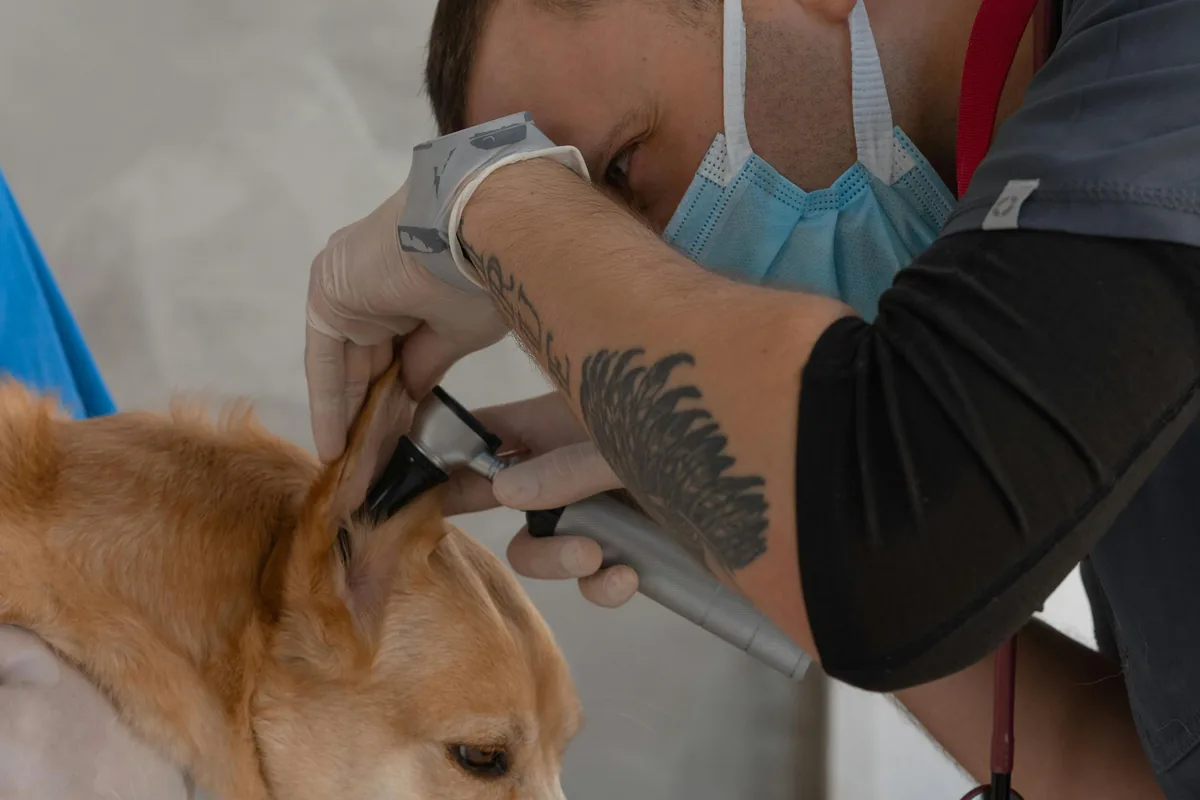
A good ear workup starts with visual inspection using an otoscope to see the canal and check whether the eardrum is intact. Ear cytology (examining cells under a microscope) is crucial — this identifies whether bacteria, yeast, or mites are present. Without cytology, treatment is guesswork.
For recurrent infections or infections not responding to treatment, culture and sensitivity testing identifies exactly which bacteria are present and which antibiotics will work. This is especially important if rod-shaped bacteria appear on cytology — that could be Pseudomonas, which resists many common antibiotics. For chronic or middle/inner ear infections, imaging like CT or MRI may be necessary.
Topical Medications
Most outer ear infections respond to ear drops combining an antibiotic, an antifungal, and an anti-inflammatory (usually a steroid to reduce swelling and itch). Treatment typically runs 7-14 days. The medication must actually reach deep into the canal — which is why proper cleaning before medication is essential.
Ear Cleaning
If the ear is full of discharge and debris, ear drops just sit on top. For severely infected ears, professional cleaning under sedation may be necessary. For mild cases, home cleaning maintains ear health between flare-ups.
Critical warning: Never clean at home if the eardrum might be damaged. Some ear cleaners are toxic to the middle ear. Always get veterinary guidance first.
When Oral Medications Are Needed
Severe bacterial infections (especially with middle ear involvement) often require oral antibiotics. Severe yeast infections may need oral antifungals. Oral steroids help with severe inflammation. But the most important medication for many dogs is allergy medication that addresses the underlying cause.
Surgical Options (Chronic Cases)
For dogs with chronic ear disease that can't be controlled medically:
Lateral ear resection opens the vertical canal to improve drainage and airflow — best for mild to moderate chronic changes.
Vertical ear canal ablation removes the vertical portion of the canal entirely — for more severe chronic changes but preserves some hearing.
Total ear canal ablation (TECA) completely removes the ear canal, resulting in deafness on that side. For dogs with end-stage ear disease who've been suffering with chronic, painful infections, it often dramatically improves quality of life by permanently eliminating the infection source.
Not sure about ingredients? Try the free Pet Allergy Scanner — scan any pet food label for common allergens in seconds.
How Do You Prevent Recurring Ear Infections?
Address the Root Cause
If allergies are driving the ear infections, no amount of ear medication provides a permanent fix. This means environmental allergen control (air purifiers, dust mite reduction), allergy medications as recommended by a vet (Apoquel, Cytopoint), immunotherapy for long-term management, food allergy investigation through an elimination diet if suspected, and ongoing ear maintenance.
Routine Ear Cleaning
For dogs prone to ear problems, regular cleaning helps maintain a healthy ear environment. Normal dogs might need monthly cleaning. Allergy-prone dogs often benefit from weekly cleaning. Dogs who swim should have ears cleaned after every swim.
Proper technique: Fill the ear canal with a vet-recommended cleaner, massage the base for about 30 seconds, let the dog shake, wipe visible debris with a cotton ball. Never insert cotton swabs deep into the canal.
Breaking the Chronic Cycle
Left undertreated, ear infections lead to ear canal thickening, which reduces airflow and drainage, which causes more infections, which causes more thickening. Early and complete treatment of every infection prevents this progression. If ear infections recur, request ear cytology and culture, discuss comprehensive allergy testing, evaluate the possibility of food allergies, and consider referral to a veterinary dermatologist.
When to See the Vet
Schedule an appointment soon for mild ear scratching or head shaking, visible redness, slight odor or discharge, or recurring problems. See the vet today for moderate discharge, significant scratching, visible discomfort, or swelling. Seek emergency care for severe pain, bloody discharge, balance problems, facial drooping, or fever.
Honest Take
Three rounds of ear-drop treatment in a year is the inflexion point. After the third recurrence, the prescription pattern is no longer treatment — it's symptom management for an undiagnosed condition. The cycle doesn't stop because the drops aren't designed to. They flatten the surface infection while leaving the underlying inflammation that produced it.
If your vet is reaching for the same drops a third or fourth time, the question that changes the conversation is: "What's our plan to identify what's driving these?" A reasonable vet has an answer — usually involving cytology, possibly culture and sensitivity, and a discussion of food trial or environmental allergy workup. If the only answer is another bottle of drops, that's the moment a dermatology referral becomes worthwhile.
Sources & Further Reading
- American Kennel Club — Ear Infections in Dogs — symptoms, causes, and treatment overview
- Merck Veterinary Manual — Otitis Externa — clinical reference for ear infection diagnosis and treatment
- American College of Veterinary Dermatology — allergy-driven ear disease and dermatological management
- Tufts University Veterinary Nutrition — dietary factors in allergy management and elimination diets
- BMC Veterinary Research — Adverse Food Reactions — food allergy prevalence and ear infection connection
Related Articles
- Best Dog Food for Allergies
- Why Is My Dog Licking Paws
- Dog Hot Spots Treatment Guide
- Limited Ingredient Dog Food Comparison
Frequently Asked Questions
How Often Do Dogs with Allergies Get Ear Infections?
Without allergy management, allergic dogs can develop ear infections every 4-8 weeks. With proper allergy control (dietary management, medications, or immunotherapy), frequency can drop to once a year or less. The recurring pattern is the key indicator that allergies are driving the infections.
Can I Treat My Dog's Ear Infection at Home?
Mild cases with minor redness and slight wax buildup may respond to gentle cleaning with vet-approved ear cleaner. However, moderate to severe infections require veterinary diagnosis and prescription medications. Treating without knowing whether the infection is bacterial, yeast, or mixed often makes things worse. Never put anything in the ear if the eardrum might be damaged.
Why Does My Dog's Ear Infection Keep Coming Back?
The most common reason is unaddressed underlying allergies — treating the infection without addressing the cause guarantees recurrence. Other reasons include stopping treatment too early, wrong medication for the organism present, resistant bacteria from repeated undertreated infections, or anatomical issues like narrow ear canals.
Are Ear Infections Contagious Between Dogs?
Ear mites are highly contagious between pets. However, bacterial and yeast ear infections are NOT contagious — they develop from conditions within the individual dog's ear (usually allergy-driven inflammation). If multiple dogs in a household have ear problems, shared environmental allergens (dust mites, mold) are more likely than infection transmission.
How Can I Tell if My Dog's Ear Infection Is From Food Allergies?
Food allergy-driven ear infections typically occur year-round (no seasonal pattern), recur every 4-8 weeks despite treatment, often involve yeast (dark brown waxy discharge), and may be accompanied by other symptoms like paw licking, skin itching, or digestive issues. Environmental allergy-driven ear infections tend to follow seasonal patterns.
Does Omega-3 Help Prevent Ear Infections?
Omega-3 fatty acids support the skin barrier and reduce inflammation throughout the body, including the ears. While not a standalone treatment, omega-3 supplementation (like Nordic Naturals Omega-3 Pet) can reduce ear infection frequency when combined with allergy management and regular ear cleaning.
Is your pet's food safe?
Upload a photo of any pet food label and find out what's safe in seconds.
Try free scanFound this useful? Save it or share it with another pet owner.
Continue Reading
Dog Breed & Food Allergies: What's Really Breed-Linked (and What Isn't)
The honest, breed-by-breed picture: food-allergen triggers are the same in every breed, but environmental (atopic) allergy and ear or skin-fold problems genuinely aren't. Here's how to tell them apart.

Why Is My Dog Licking Their Paws? Complete Guide
Why dogs lick their paws excessively covering allergies as the top cause, food vs environmental triggers, brown saliva staining, and treatment options.
Dog Hot Spots: Fast Treatment Guide & Prevention
Hot spots can double in size within hours if untreated. Learn emergency treatment steps and how to break the scratch-lick cycle that makes them spread.
Best Dog Food for Allergies: Complete Guide & Reviews
Beef and chicken cause 65%+ of canine food allergies. Compare 10 limited ingredient, hydrolyzed, and novel protein diets with the exact foods vets recommend.
Cite this article
Gary Innes. (2026). Dog Ear Infections: Causes, Symptoms & Treatment Guide. Pet Allergy Scanner. Retrieved 2026-07-06T22:21:12.000Z from https://petallergyscanner.com/blog/dog-ear-infections-complete-guide/
For other citation styles or to embed our tools, see the press & citations page.
About the author — Gary Innes
Gary is a UK pet owner who built Pet Allergy Scanner after 7+ years navigating his Cockapoo's chronic food allergy — a dog whose safe diet has narrowed to salmon, venison and vegetables. He is not a veterinarian and has no veterinary or nutrition qualifications. Every article on the site is owner-to-owner research that cites primary veterinary sources (Mueller et al. BMC Vet Res 2016, ACVD, Merck Vet Manual) and defers diagnostic and treatment decisions to a vet.
Read more about Pet Allergy Scanner's editorial standards →